How We Integrate APIs in Mobile Apps for Seamless Data Sync
By BestoDesign Solutions – Your Trusted Partner in Mobile App Development in Thane
In the modern mobile-first world, seamless data synchronization is the backbone of any successful mobile application. Whether it’s real-time updates, data consistency across devices, or a smooth user experience, efficient API integration plays a crucial role. At BestoDesign Solutions, a leader in Mobile App Development in Thane, we specialize in crafting robust mobile apps that deliver high performance, thanks in large part to our deep expertise in API integration.
In this article, we take you behind the scenes to understand how we integrate APIs in mobile apps for seamless data sync from planning and design to implementation and testing.
What is API Integration in Mobile Apps?
API (Application Programming Interface) integration in mobile apps involves connecting the app with external or internal services to exchange data, trigger actions, and access features. These APIs can be RESTful, GraphQL, or even SOAP in legacy systems.
APIs help mobile apps:
- Communicate with servers
- Retrieve and post data
- Authenticate users
- Perform transactions
- Access third-party services like payment gateways or social media
Why Seamless Data Sync Matters
Seamless data synchronization means that any change in data is reflected instantly and accurately across all platforms and devices. For instance:
- A messaging app must show real-time messages
- An e-commerce app must update product stock live
- A fitness app should sync health data across devices
Benefits of seamless sync:
- Better user experience
- Data consistency
- Offline accessibility with sync when online
- Real-time collaboration features
Planning for API Integration
Our Mobile App Development process in Thane begins with strategic planning:
- Requirement Gathering: Understanding what data needs to be synced.
- API Mapping: Outlining endpoints, data flow, and interaction points.
- Security Planning: Ensuring secure data transmission.
- Latency Requirements: Determining how fast data sync needs to be
Choosing the Right API Architecture
Based on the project needs, we choose the most effective API type:
- RESTful APIs: Lightweight and widely supported.
- GraphQL APIs: Great for apps needing custom queries and minimal over-fetching.
- WebSockets: For real-time data sync (e.g., chat or live dashboards).
For mobile apps requiring minimal battery and data consumption, we prefer RESTful and GraphQL over traditional heavy APIs in Mobile Apps
Frontend & Backend Considerations
We ensure the UI/UX is perfectly aligned with backend APIs. This involves:
- Structuring UI updates based on API responses
- Implementing loaders, error messages, and data placeholders
- Designing efficient API calling mechanisms (throttling, debounce, retry logic)
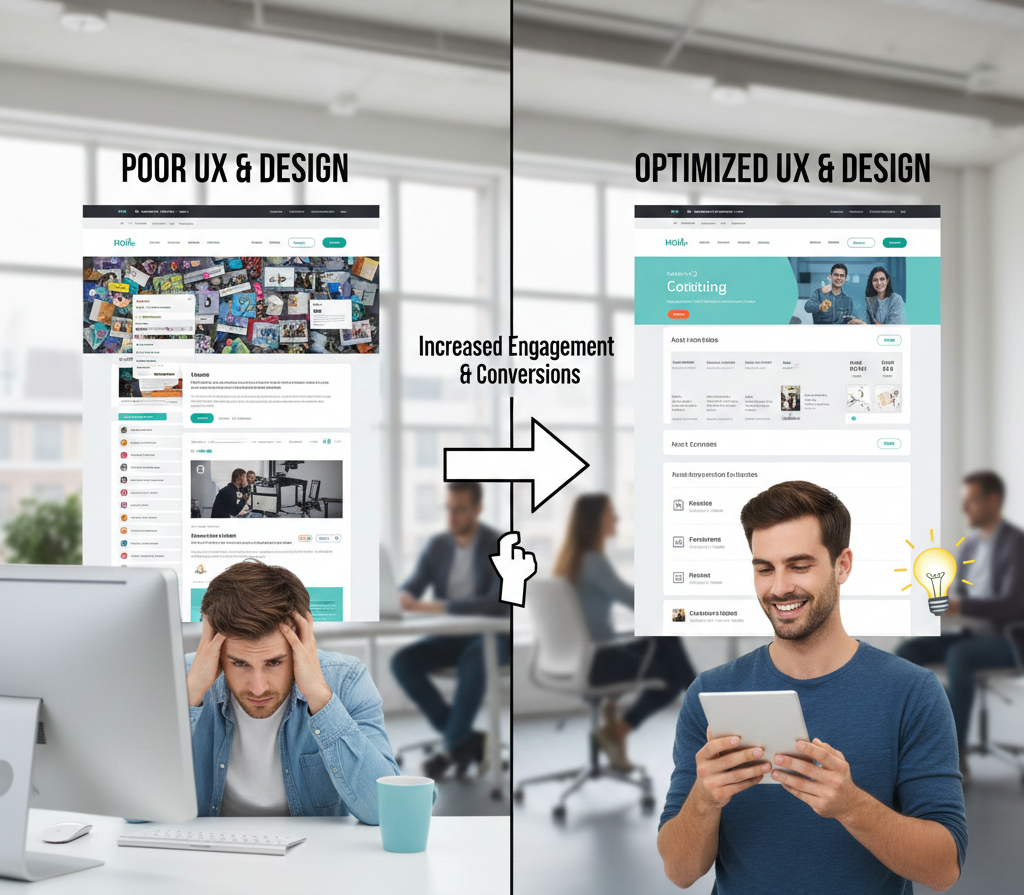
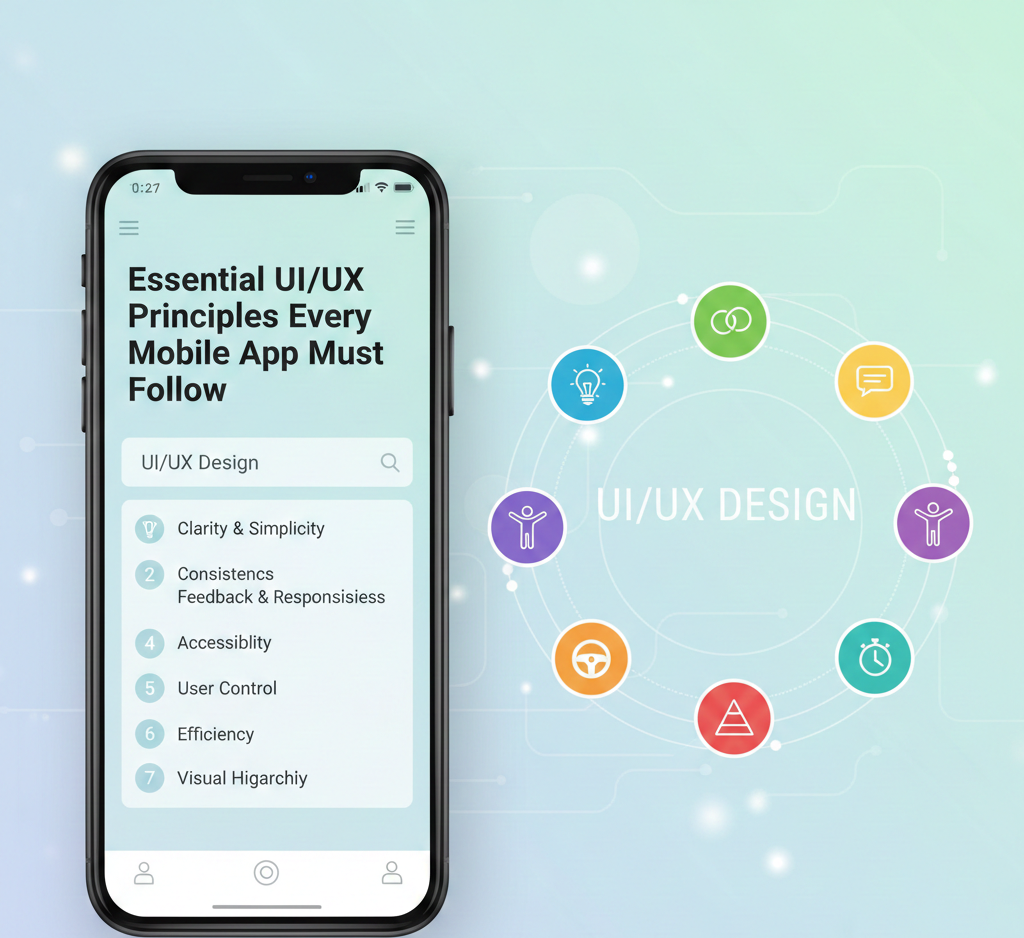
Our Mobile App UI/UX Design in Thane ensures interfaces are responsive and user-friendly even during background data sync.
Authentication and Security
API integration must be secure. We use:
- OAuth 2.0 or JWT for secure token-based authentication
- SSL/TLS encryption for secure data transmission
- Rate limiting and IP whitelisting for endpoint protection
Security is never an afterthought—it’s a design principle.
Real-Time Sync vs Batch Sync
Depending on the use-case, we implement:
- Real-Time Sync: For live updates (WebSockets, Firebase, etc.)
- Batch Sync: For non-critical updates that can be processed periodically (background jobs, cron jobs)
Often, we hybridize the sync strategies for optimized performance and reduced load.
Offline Functionality & Data Caching
For apps where internet access is intermittent:
- We implement local databases (SQLite, Room, CoreData)
- Use data caching mechanisms (Cache-Control headers, IndexedDB)
- Enable deferred sync that retries API calls once the internet is back
Offline-first design ensures uninterrupted user experience.
Testing API Integration
Our QA team rigorously tests APIs through:
- Unit tests for endpoint logic
- Integration tests for API-client interaction
- Mock servers to test during backend development delays
- Postman and Swagger for automated testing
We simulate low connectivity and edge cases to ensure robustness.
Tools & Tech Stack We Use
- Backend: Node.js, Laravel, Firebase, Django
- Frontend: React Native, Flutter, Kotlin, Swift
- APIs: REST, GraphQL, WebSockets
- Database: MongoDB, MySQL, PostgreSQL
- DevOps: Docker, CI/CD, Jenkins, GitHub Actions
Challenges and Solutions
| Challenge | Solution |
| API Downtime | Fallback handlers & error messages |
| Latency | Edge caching & CDN support |
| Data Conflict | Conflict resolution strategies (Last write wins, merge logic) |
| Inconsistent APIs | API versioning and documentation |
Best Practices We Follow
- Use environment-based configs (dev, prod, staging)
- Limit over-fetching with precise API calls
- Implement error logs and analytics
- Secure every API endpoint
- Ensure API backward compatibility
Case Study: Mobile App UI/UX Design in Thane
One of our flagship projects involved creating a real-time logistics tracking app for a Thane-based logistics firm. The challenge was to sync vehicle location, order status, and delivery updates in real time.
How we solved it:
- Used Firebase Realtime Database for live tracking
- Implemented GraphQL for flexible data queries
- Designed a mobile-first UI/UX with live maps, alerts, and dashboards
- Achieved 99.9% data sync accuracy with 500+ active users
Conclusion
At BestoDesign Solutions, we combine strategy, design, and engineering to create mobile apps that not only look great but also work flawlessly. API integration and seamless data sync are pillars of our approach to Mobile App Development in Thane. We believe that the future of mobile experiences lies in real-time, secure, and intuitive data-driven applications.
If you’re looking for expert developers who specialize in Mobile App UI/UX Design in Thane, let’s connect and build something incredible together.
Get in touch with BestoDesign Solutions today and turn your app idea into a synchronized reality.